

The Squeezed Middle of British Business
We often hear politicians talking about the squeezed middle when discussing household incomes. But what about the squeezed middle of British business? I’m not talking about multinational corporations with substantial financial resources, international operations and access to capital markets. Nor am I talking about the very smallest businesses, some of which will benefit from targeted business rates relief. I’m talking about the established, often family-owned businesses employing 30, 50 or 70 people. The local manufacturer that has been trading for decades, the engineering company supplying components to British industry, or the independent hospitality business employing dozens of local people.
These are businesses that may be too large to benefit from some of the support available to the smallest enterprises, but nowhere near large enough to absorb continually increasing costs without consequences. They’re also absolutely fundamental to communities such as Hastings, St Leonards and the wider East Sussex economy. At ASL Recruitment, we work closely with employers across the area, and we’re seeing the pressures they’re facing first-hand. Businesses are losing orders to overseas competitors, reviewing their staffing levels and postponing recruitment decisions. Only this week, we’ve seen a relatively modest-sized local employer announce 17 job losses. Those aren’t abstract economic statistics. They’re real people, real families and real businesses facing increasingly difficult decisions.
The Real Cost of Employing People
If there was one announcement I had hoped to hear yesterday, it was a reconsideration of the increase in employer National Insurance introduced in Rachel Reeves’ 2024 Budget. I didn’t particularly expect it, but I hoped the Chancellor might recognise the cumulative impact that increasing employment costs has had on businesses already struggling with rising wages, energy prices and operating expenses. Employer National Insurance increased from 13.8% to 15% in April 2025, while the annual earnings threshold at which employers begin paying it fell from £9,100 to just £5,000.
Those percentages and thresholds might not mean much to someone who has never had to meet a payroll, but the actual costs are considerable. Let’s take a typical local manufacturing business employing 70 people, each earning £30,000 a year. Before Rachel Reeves’ changes, that business would have paid approximately £201,894 annually in employer National Insurance, before Employment Allowance. Following the increase in the rate from 13.8% to 15%, combined with the reduction in the earnings threshold from £9,100 to £5,000, that figure rises to £262,500. That’s an additional £60,606 every year, without employing a single additional person or increasing anyone’s salary. Even allowing for the government’s increase in Employment Allowance from £5,000 to £10,500, our example business is still facing an additional £55,106 in annual employment costs.
That’s more than £55,000 a year that isn’t available for investment, training, equipment or additional employment. And that’s before considering subsequent increases in wages, energy bills and other operating expenses. The fundamental problem is that employer National Insurance is payable regardless of whether a business is making a healthy profit or struggling to break even. Anyone who has managed a payroll knows that turnover isn’t profit, that a healthy order book doesn’t guarantee positive cash flow, and that employing another person involves considerably more than simply paying their wages. For a business operating on tight margins, an additional £55,000 in annual overheads can make a very real difference to its ability to compete. And when those costs cannot be passed on to customers, something else has to give. Sometimes that’s investment, sometimes it’s recruitment, and sometimes, unfortunately, it’s jobs. In fact, for our example business, the simplest way to recover that additional £55,000 would be to make two employees redundant. And in my experience, working with employers across Hastings and East Sussex, that’s precisely the sort of difficult decision some businesses have been making.
Are We Taxing the Very Thing We Want to Encourage?
History offers plenty of examples of governments discovering that taxation changes behaviour. The Window Tax, introduced in 1696, famously encouraged some property owners to brick up their windows to reduce their tax liability. More than three centuries later, I wonder whether we should be asking similar questions about the way we tax employment. If we want businesses to create more jobs, why are we increasing the cost of employing people?
Jeremy Hunt’s reductions in employee National Insurance increased take-home pay for millions of workers. That was undoubtedly welcome for those receiving it, but I’ve always questioned whether reducing the cost of employment itself might have been a better priority. After all, there’s little benefit in reducing the tax someone pays on their wages if the business employing them can no longer afford to keep them.
Of course, reducing employer National Insurance would cost the Treasury money in the short term, and it wouldn’t automatically guarantee additional jobs. But reducing the cost of employment could encourage businesses to retain staff, recruit additional workers and invest in growth. When businesses employ more people, those employees pay taxes, spend money and support other businesses. When companies grow and become more profitable, they pay more Corporation Tax. The Treasury doesn’t just collect tax from businesses. It collects tax because businesses exist, employ people, generate profits and create economic activity. Surely we should be doing everything reasonably possible to encourage that activity.
Businesses Need Room to Grow, Not Another Application Form
To be fair, yesterday’s Budget contained measures intended to support British business. The expansion of the British Business Bank’s financial capacity, additional investment in growing companies and targeted business rates relief are potentially welcome developments. But I do wonder whether we’re sometimes confusing announcing support for businesses with actually making it easier to run one.
Anyone who has tried to access business funding will know that government-backed schemes can involve eligibility criteria, extensive paperwork, financial forecasts and compliance requirements. Some of those safeguards are necessary, particularly where public money is involved, but accessing support can become another administrative burden for businesses already stretched to their limits. And borrowing money doesn’t necessarily solve an underlying profitability problem. The owner of a manufacturing business employing 50 people may not need another loan or investment programme. They may simply need more competitive energy costs, a manageable employment tax burden and sufficient confidence in the future to invest in their business.
Business owners don’t necessarily want another government scheme to help them survive. They want an economy in which they can succeed without needing one.
Once Those Jobs and Skills Are Gone, Getting Them Back Isn’t Easy
One of the things that concerns me most about the current economic environment is the potential long-term damage to our manufacturing base and the skills that support it. When a manufacturer loses a contract to an overseas competitor, the immediate consequence may be reduced revenue and fewer employees. But the longer-term consequences can be much more significant. Skilled workers move into other industries or leave the area, apprenticeship opportunities disappear, investment in equipment and training is postponed, and suppliers lose customers. If that business eventually closes, rebuilding what has been lost can take years, assuming it happens at all.
Consider the shortage of skilled welders in Britain. The Migration Advisory Committee has identified welding as an occupation experiencing labour shortages, and a recent parliamentary inquiry highlighted Babcock’s recruitment of 300 welders from the Philippines in 2025 because it could not find sufficient skilled applicants in the UK. Overseas recruitment can be an entirely legitimate and necessary response to immediate skills shortages, but surely we should also be asking why we’re struggling to develop and retain sufficient skills domestically. If we allow our manufacturing base to decline, we risk losing not only today’s jobs but also the training opportunities that would have developed tomorrow’s skilled workforce.
It’s a difficult cycle to reverse. Businesses need skilled employees to compete and grow, but those skills take years to develop. If employers are struggling to remain viable, they’re less likely to invest in apprenticeships and training. When demand eventually returns, the skills may no longer be available, leaving businesses dependent on overseas recruitment to fill the gaps. Immigration can help address those shortages, but it shouldn’t become a substitute for maintaining the industries and training opportunities that allow us to develop our own workforce.
And this isn’t simply a manufacturing problem. Across hospitality, retail and other sectors, businesses are facing difficult decisions about whether they can continue trading profitably. International events undoubtedly contribute to these pressures. Conflicts, trade uncertainty and volatile energy markets affect businesses across the world, and no British government can control all of those factors. But it can influence the domestic costs and regulatory environment within which British businesses must compete. When businesses are already under pressure, those decisions matter enormously.
It’s the Economy, Stupid
I recognise that the government faces difficult financial choices. Public services need funding, borrowing must be managed and international economic pressures are real. I’m not suggesting that businesses shouldn’t pay tax or that regulation doesn’t have an important role. But I do think we need to reconsider the balance between raising revenue from businesses and creating the conditions in which those businesses can grow. You can understand the economics of running a country without necessarily understanding the realities of running a business, but surely good economic policy requires an appreciation of both.
A successful business employing 60 people contributes considerably more to the economy than the same business struggling to survive with 40 employees, all else being equal. And a business that closes altogether stops generating profits, employing people and contributing to the local economy in the way it once did. That’s why I had hoped yesterday’s Budget might signal a more significant change of direction, particularly on the cost of employment. Instead, while there are measures that will benefit some businesses, I suspect many established SMEs will be left feeling that very little has changed.
We need to support tomorrow’s entrepreneurs and emerging industries, absolutely. But we also need to recognise the value of the established businesses that are already employing people, already investing in their communities and already contributing to the economy. We cannot afford to wait until those businesses have disappeared before recognising that they needed an environment in which they could compete and prosper.
Perhaps the most important question to ask after this Budget isn’t how much money the government has announced for business support, but whether it’s becoming easier or harder to run a successful business in Britain.
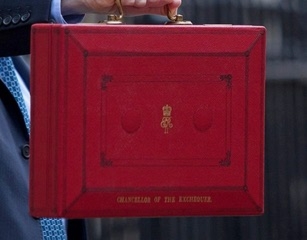
Image credit: HM Treasury, via Wikimedia Commons. Original photograph cropped for this article. Contains public sector information licensed under the Open Government Licence v3.0.